§ 00 · INDEX
ChangHeon
Han.
한창헌 · HANROLE
Ph.D. Student, Computer Science & Engineering
ATChalmers University of Technology · WASP-HS
FOCUSLearned cultural representation spaces in generative AI for creative domains.
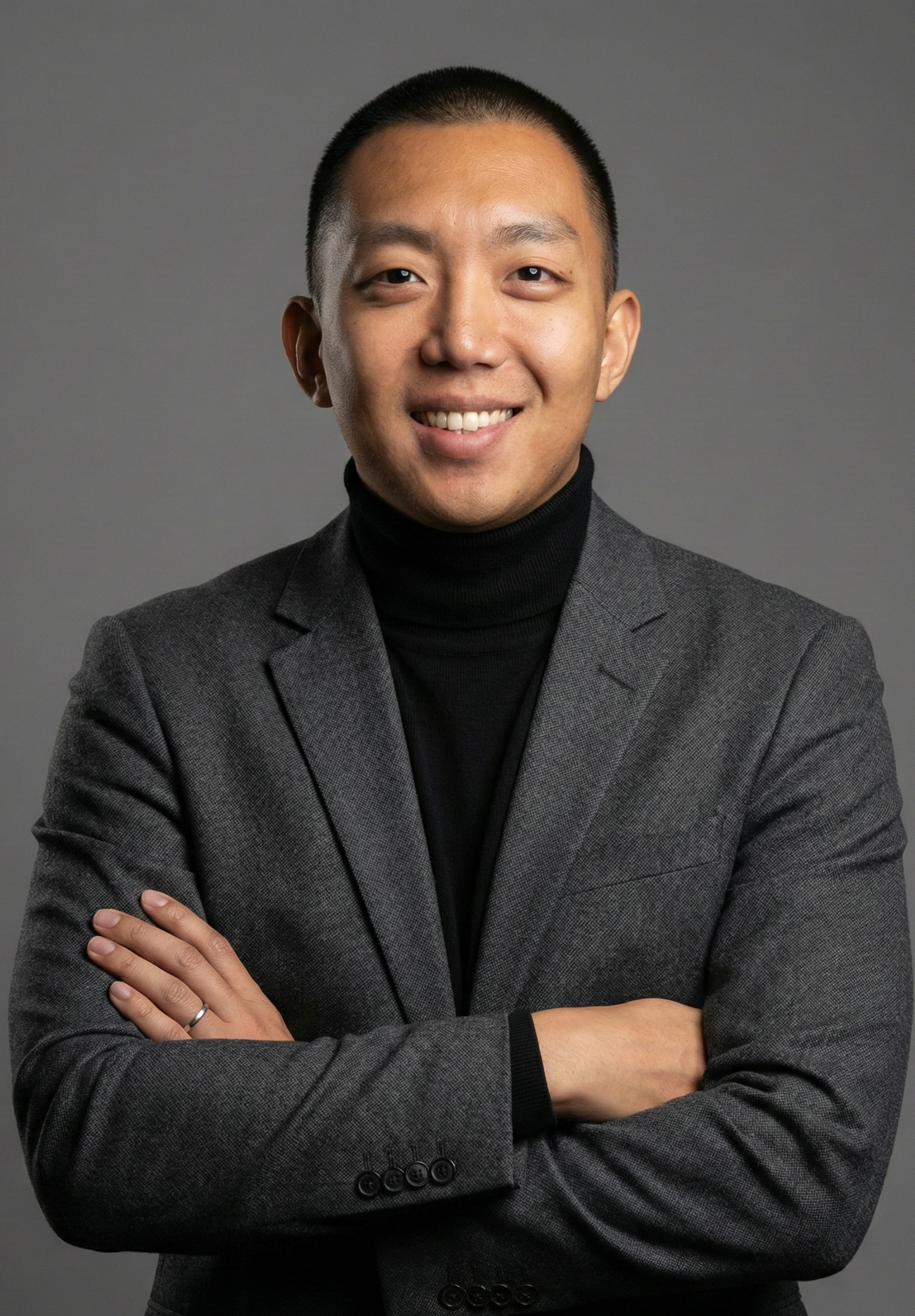
FIG. 01SUBJECT, FACING CAMERA
A.
Researcher
AI · multimodal · musicMultimodal learning, signal processing, NLP, music information retrieval. Previously at SONY Europe and SMU.
B.
Producer
800K+ streams · K-pop editorial playlistsSeven years of music production. Sole songwriter and rights holder on 33 copyrighted songs, four Spotify editorial features, ten produced tracks across five artists.
§ 01
About
I am a Ph.D. student at Chalmers University of Technology, affiliated with WASP-HS — the Wallenberg AI, Autonomous Systems and Software Program for Humanity and Society. My research focuses on learned cultural representation spaces in generative AI for creative domains.
Before starting my Ph.D., I was a Research Engineer at Singapore Management University working on career trajectory analysis using dynamic GNNs. I completed a research internship at SONY Europe, where I worked on fine-grained instrument music source separation using text-audio multimodal encoders. I received my M.S. in Artificial Intelligence from Hanyang University in 2025, advised by Prof. Minsam Ko.
Multimodal Learning
Signal Processing
Natural Language Processing
Music Information Retrieval
§ 02
Recent
[04 items]↓ LATEST FIRST2026.01MILESTONE
Started Ph.D. in CSE at Chalmers University of Technology (WASP-HS).
2025.11ROLE
Serving as Partnership Manager at Munich Music Labs.
2025.10ROLE
Joined Singapore Management University as a Research Engineer.
2024.08ROLE
Started research internship at SONY Europe — text-conditioned music source separation.
§ 03
Research Highlights
→ FULL LIST AT /RESEARCHNAACL · 2025
Sentimatic: Sentiment-guided Automatic Generation of Preference Datasets for Customer Support Dialogue System
SuHyun Lee · ChangHeon Han
Automatic, sentiment-guided framework that produces large-scale preference datasets without human annotation — improves emotional appropriateness in customer-support LLMs.
ICASSPW · 2024
Optimizing Music Source Separation in Complex Audio Environments Through Progressive Self-Knowledge Distillation
ChangHeon Han · SuHyun Lee
Fine-tuning strategy for hearing-aid–oriented source separation. Softening targets with previous-epoch predictions gives +1.2 dB SDR over the baseline.