Music and creative content carry rich cultural meanings that are often expressed through multiple modalities—audio signals, lyrics, symbolic representations, and contextual metadata. Yet, teaching machines to understand and generate such content remains challenging, as it requires not only processing diverse data types but also capturing the nuanced cultural and emotional contexts embedded within them.
My research focuses on understanding how AI models learn and represent cultural expressions in creative domains. I investigate how models encode cultural meanings in their learned representations, and how we can interpret and understand these representations. By bridging modalities through multimodal learning, analyzing musical structure via music information retrieval, and leveraging techniques from signal processing and natural language processing, I aim to make AI's understanding of creative content more interpretable and aligned with human perception.

SuHyun Lee, ChangHeon Han, Woohwan Jung, Minsam Ko
NLP for Positive Impact Workshop (ACL)
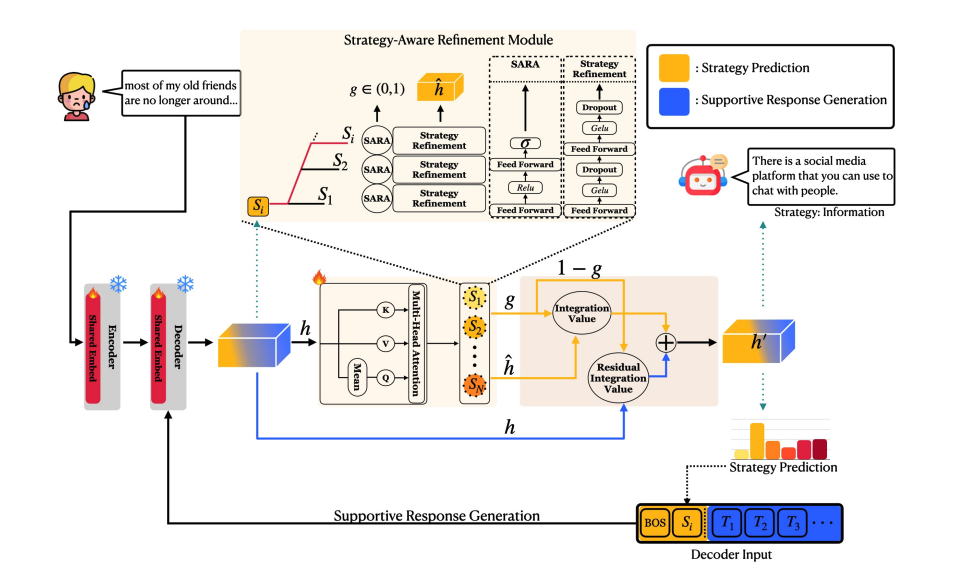
This work proposes STAR, a strategy-aware refinement module that mitigates task interference in emotional support dialogue systems. By disentangling decoder representations and dynamically fusing task-specific information, the model achieves state-of-the-art performance in both strategy prediction and response generation.
# emotional support # multitask learning # NLP
SuHyun Lee, ChangHeon Han, Woohwan Jung, Minsam Ko
NLP for Positive Impact Workshop (ACL)
This work proposes STAR, a strategy-aware refinement module that mitigates task interference in emotional support dialogue systems. By disentangling decoder representations and dynamically fusing task-specific information, the model achieves state-of-the-art performance in both strategy prediction and response generation.

SuHyun Lee, ChangHeon Han
NAACL 2025
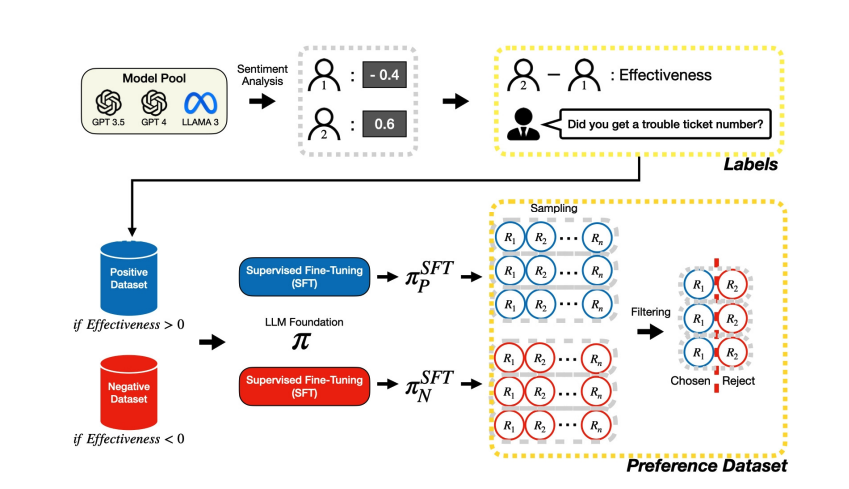
Sentimatic introduces an automatic framework for generating preference datasets for preference optimization without human annotation. Using sentiment-guided classification and controlled sampling, the method produces large-scale high-quality preference data and improves emotional appropriateness in AI customer support systems.
# dialogue systems # preference data # NLP
SuHyun Lee, ChangHeon Han
NAACL 2025
Sentimatic introduces an automatic framework for generating preference datasets for preference optimization without human annotation. Using sentiment-guided classification and controlled sampling, the method produces large-scale high-quality preference data and improves emotional appropriateness in AI customer support systems.

ChangHeon Han, Jaemyung Shin, Minsam Ko
Korea Computer Congress 2024 (KCC)
This study proposes an LLM-based prompt augmentation method for improving ASMR audio generation in Text-to-Audio models. By explicitly modeling ASMR triggers and key attributes such as action and material, the method produces more detailed sound descriptions and improves both generation quality and user experience.
# text-to-audio # prompt augmentation # ASMR
ChangHeon Han, Jaemyung Shin, Minsam Ko
Korea Computer Congress 2024 (KCC)
This study proposes an LLM-based prompt augmentation method for improving ASMR audio generation in Text-to-Audio models. By explicitly modeling ASMR triggers and key attributes such as action and material, the method produces more detailed sound descriptions and improves both generation quality and user experience.

ChangHeon Han, SuHyun Lee
ICASSP 2024 Workshops (ICASSPW) Technical Report
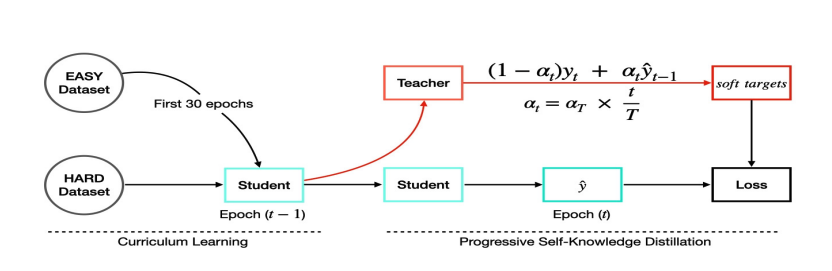
This technical report presents a fine-tuning strategy for hearing-aid-oriented source separation, where stereo signal entanglement makes training unstable. By softening targets using predictions from the previous epoch, the proposed method improves SDR by 1.2 dB over the baseline.
# music source separation # knowledge distillation # audio
ChangHeon Han, SuHyun Lee
ICASSP 2024 Workshops (ICASSPW) Technical Report
This technical report presents a fine-tuning strategy for hearing-aid-oriented source separation, where stereo signal entanglement makes training unstable. By softening targets using predictions from the previous epoch, the proposed method improves SDR by 1.2 dB over the baseline.

ChangHeon Han, SuHyun Lee, Minsam Ko
ISMIR 2023 Late-Breaking/Demo (LBD)
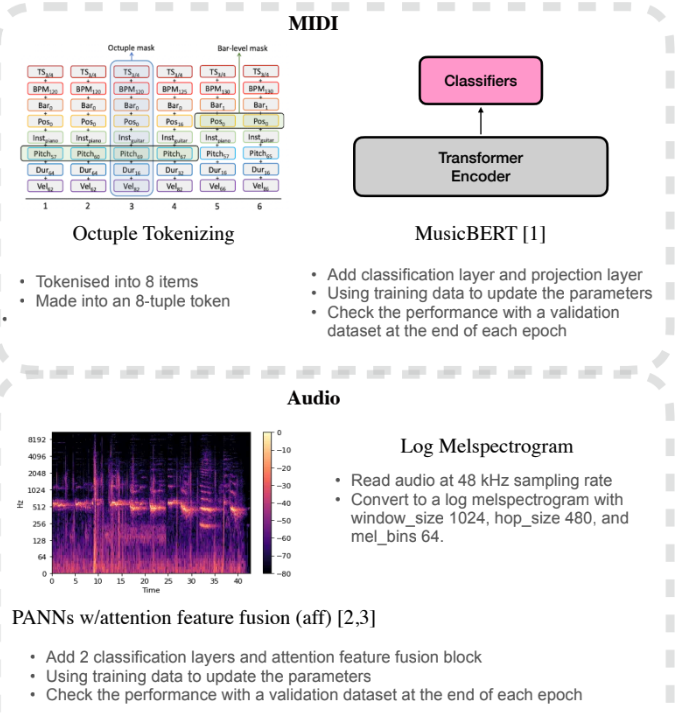
This work proposes a deep learning model that automatically predicts the track role of single-instrument music sequences, reducing the need for manual annotation. The model achieves 87 percent accuracy in the symbolic domain and 84 percent in the audio domain, demonstrating its potential for AI-based music generation and analysis.
# music information retrieval # sequence modeling
ChangHeon Han, SuHyun Lee, Minsam Ko
ISMIR 2023 Late-Breaking/Demo (LBD)
This work proposes a deep learning model that automatically predicts the track role of single-instrument music sequences, reducing the need for manual annotation. The model achieves 87 percent accuracy in the symbolic domain and 84 percent in the audio domain, demonstrating its potential for AI-based music generation and analysis.

Project
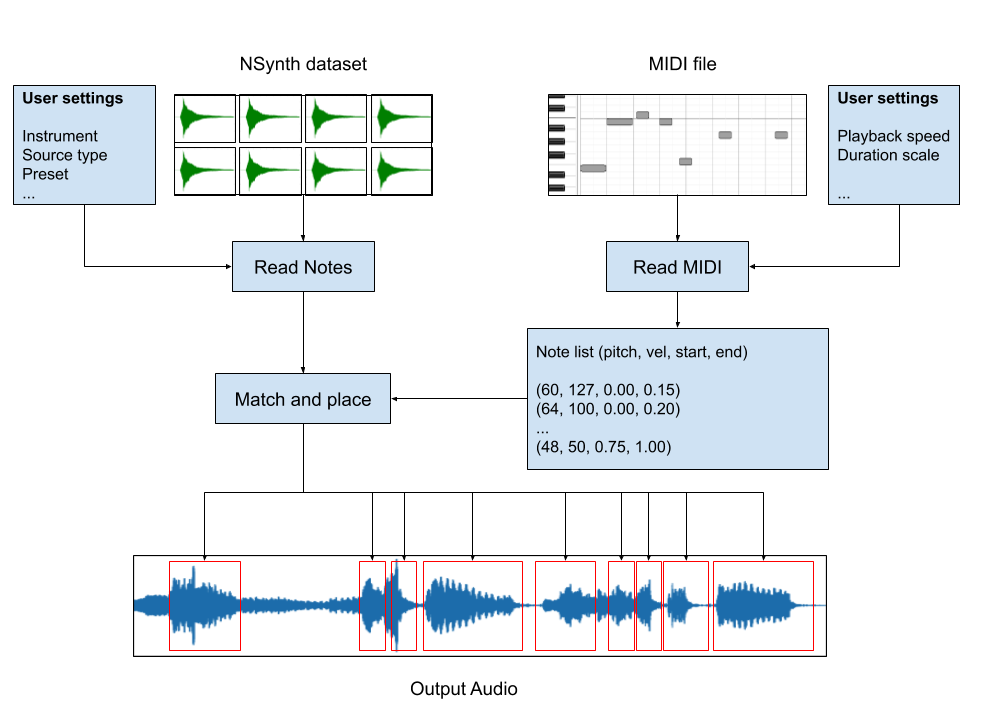
Open-source tool that assigns candidates in the NSynth dataset to lock in a single preset across a MIDI sequence.
# music information retrieval # midi # dataset
Project
Open-source tool that assigns candidates in the NSynth dataset to lock in a single preset across a MIDI sequence.
Project
Segregates a multi-track MIDI file into individual instrument tracks, extracts detailed metadata for each track, and supports truncation/saving by a specified number of measures.
# music information retrieval # midi # tools
Project
Segregates a multi-track MIDI file into individual instrument tracks, extracts detailed metadata for each track, and supports truncation/saving by a specified number of measures.
Project
Developed a soothing sound audio generation program with five distinct noise colors and three weighting filters (copyrighted with the Korea Copyright Commission).
# audio # signal processing # tools
Project
Developed a soothing sound audio generation program with five distinct noise colors and three weighting filters (copyrighted with the Korea Copyright Commission).